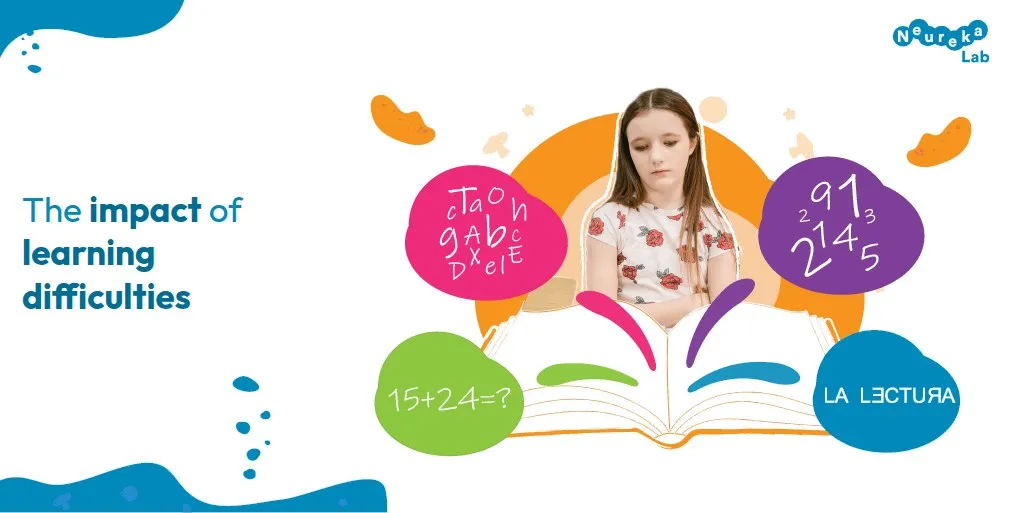
It is estimated that 20% of children have some form of learning difficulty (dyslexia, dyscalculia, ADHD…). Learning difficulties play a very significant role in school failure, a problem found all over the world. In the case of Spain, in 2020 it was the country with the second-highest rate of school failure in Europe, at 16% (Source: Eurostat)).
How learning difficulties affect a child’s development
Among the factors that contribute most to school failure are difficulties with reading and writing, mathematics and attention. A child’s cognitive profile tells us what their strengths and weaknesses are. This knowledge allows us to work more specifically, and in this way enhance learning and facilitate intervention for learning difficulties. The lack of use of early detection tools means that children with learning difficulties do not receive appropriate support at the start of primary education, which has a negative impact on their development and school performance and contributes to school failure.
It is also important to highlight that children with learning difficulties have a high prevalence of social-emotional difficulties, making them more vulnerable. Moreover, in adulthood, the presence of learning difficulties is associated with long-term problems including unemployment or employment paid below a living wage, fewer educational and job opportunities, and poverty. It is estimated that the lifetime earnings of a person without secondary education may be 1 million dollars lower than those of a university graduate.
Assessing learning difficulties
To adjust academic demands to the cognitive abilities of children with learning difficulties, it is necessary to detect the factors that require attention in their development.
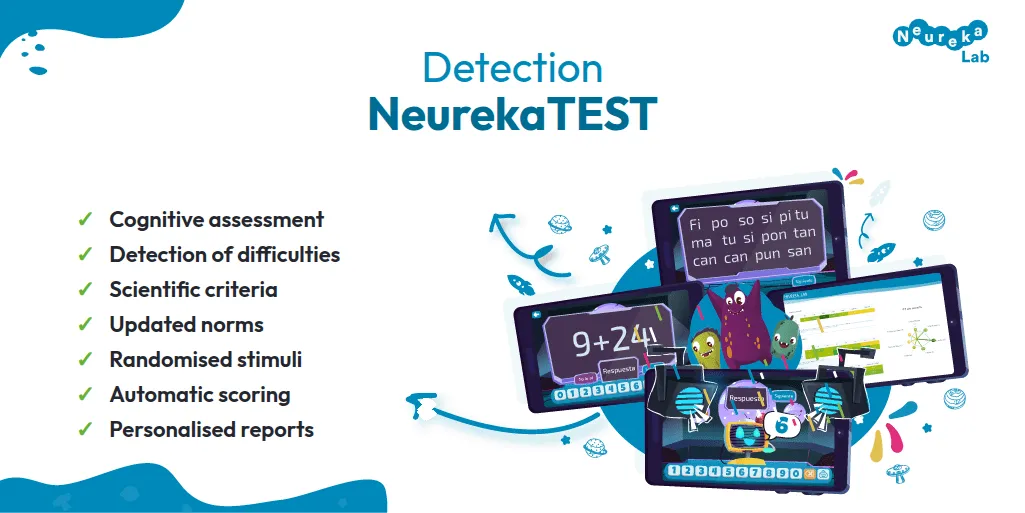
NeurekaTEST aims to provide health and education professionals with a digital battery of tests for assessing the main cognitive functions in children aged 5 to 12 in key areas for learning, such as numerical processing and calculation, reading processes, sustained attention, working memory and behaviour. NeurekaTEST enables early detection and makes it possible to intervene in learning difficulties earlier and in a more personalised and effective way.