The 5 most common learning difficulties in the classroom
Scientific involvement has played a prominent role in detecting the presence of learning difficulties during the first years of a person’s life. Cognitive and skill development becomes especially relevant during this period, making it important to pay attention to a child’s learning process from an early age. Thanks to advances in learning research, any neurobiological alteration can be identified in time during a child’s academic years.
The main learning difficulties
Learning difficulties are present from birth, but they often go undetected until the child shows some indication of a specific difficulty in keeping up with the academic pace in a particular area, despite having a favourable environment for their development. Although this neurobiological condition has no cure, its negative impact can be reduced if it is detected and supported in time, enabling children to succeed in their academic journey and adapt to work and social demands. Knowing the different learning difficulties will help determine the actions to take in each case.
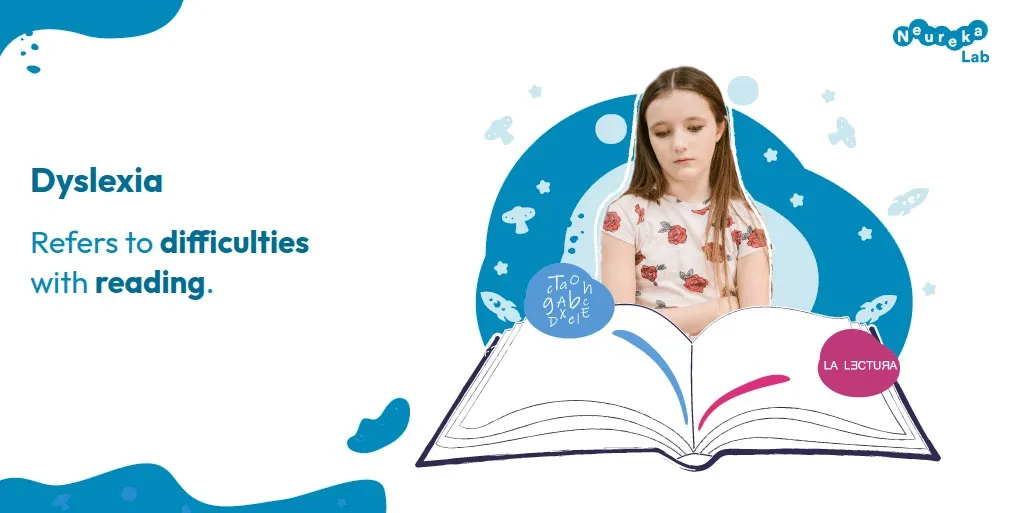
Dyslexia
This is the most widely recognised disorder among the general population and refers to difficulties with reading. People with dyslexia experience difficulties during learning when information has to be interpreted through reading.
Some indicators of dyslexia are:
- Slow reading with problems decoding words.
- Confusing the order of letters while reading.
- Difficulties understanding grammatical rules.
- Lack of reading comprehension and memory after reading.
- Difficulty spelling.
Dysgraphia
This is the disorder that affects written expression. People with dysgraphia tend to have problems when writing, especially by hand — the most common writing method during childhood. This disorder is often linked to poor motor coordination during writing.
Some indicators of dysgraphia are:
- Slow writing.
- Handwriting that is difficult to read.
- Poor posture and awkward use of the writing tool.
- Difficulty organising a text when writing.
- Trouble reproducing letters and words within a given space.
Dyscalculia
Dyscalculia is the term for a disorder in the acquisition of mathematical skills and difficulties with numerical processing and calculation. People with dyscalculia have no problem keeping up with the academic pace in general, but they struggle with numbers and mathematical reasoning.
Some indicators of dyscalculia are:
- Difficulties performing simple calculations.
- Incorrect use of mathematical symbols.
- Using fingers to count.
- Poor understanding of problem statements.
- Difficulties interpreting symbolic quantities (numbers) and non-symbolic quantities (groups).
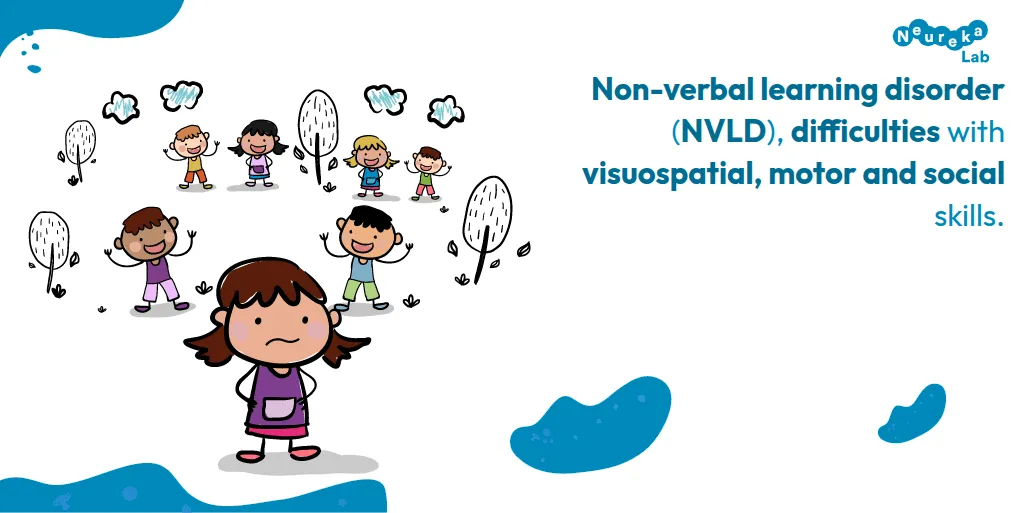
Non-verbal learning disorder
Non-verbal learning disorder (NVLD) is characterised by a contrast between good verbal skills and difficulties with visuospatial, motor and social skills. People with NVLD understand verbal information, but have difficulty recognising any type of non-verbal communication.
Some indicators of non-verbal learning disorder are:
- Difficulties interpreting facial expressions and body language.
- Problems adapting to the environment and to new situations.
- Motor coordination difficulties.
- Socio-cognitive dysfunctions.
- Problems with spatial organisation.
Oral and written language disorder
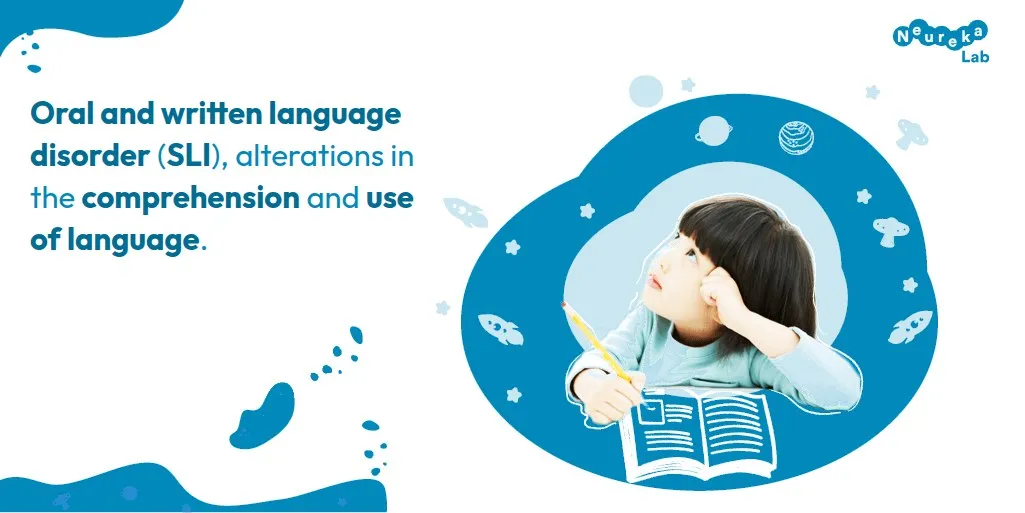
This is a limitation in language acquisition. People with specific language impairment (SLI), despite having normal cognitive abilities, show alterations in the comprehension and use of language, whether when speaking — oral SLI — or when writing — written SLI.
Some indicators of a language disorder are:
- Language acquisition at a slower pace.
- Limited vocabulary when expressing themselves.
- Comprehension difficulties.
- Their speech is hard to understand.
- Lack of response to oral stimuli.
Diagnosing learning difficulties
Identifying the causes of a child’s learning difficulties in their academic environment makes it possible to establish specific action to improve their development and school achievement. Support throughout the learning process is crucial in order to understand the child’s strengths and weaknesses across each capacity, skill and area of knowledge.
NeurekaLAB offers different tools that enable early detection of the presence of learning difficulties. These tools do not replace a diagnostic assessment, but they help build a cognitive profile of children and determine whether a professional evaluation is needed.