Education is a discipline in which a wide variety of profiles converge in the same classroom. The challenge of education is to facilitate learning for each student profile, in order to guarantee a similar academic pace for all pupils. However, complications can arise throughout the learning process: lack of motivation, presence of learning difficulties, low attention and poor assimilation of new knowledge, and so on.
The new generations are growing up in a digitalised environment with a high degree of audiovisual stimuli, and the incorporation of technology into their daily lives is increasingly common. The current role of education proposes bringing learning closer through new teaching methodologies that provide appealing stimuli for students.
What is GBL?
Several studies confirm that games - of any kind - foster attention, imagination, memory, logical thinking and more. Conventional education delivers new knowledge, but often many students cannot keep up with the expected pace of learning. For this reason, new teaching methods have been incorporated to encourage richer learning, such as serious games, games whose purpose is not focused solely on fun, but on achieving specific objectives.
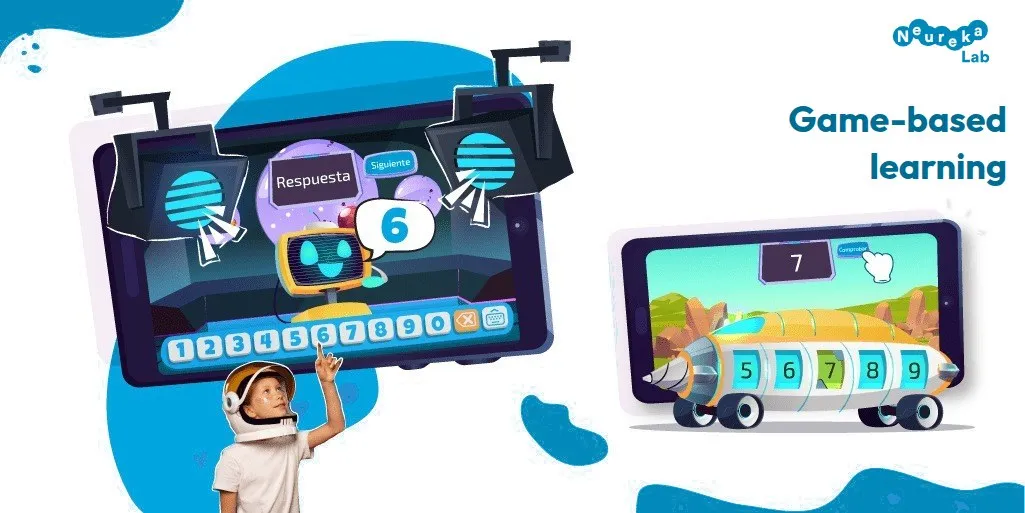
Game-based learning (or GBL) is a teaching method that employs games and serious games in order to enhance children’s different capacities during their learning process. Through play, a more appealing form of learning is offered to increase motivation in the classroom. The aim of game-based learning is to deliver knowledge in a fun and motivating way, generating a playful environment while learning.
Benefits of GBL for learning difficulties
Game-based learning has not only proved to be a form of teaching that breaks with the conventional educational model to foster more motivating education, but it also serves to identify and enhance children’s different capacities in each area of knowledge, a key aspect for improving comprehension and the assimilation of information in children with learning difficulties.
To optimise the learning process, it is considered important to combine conventional education with GBL activities. Incorporating play into education offers the following benefits:
- It increases children’s motivation during their learning.
- It works on reasoning and logical thinking.
- It generates an imaginative environment that enhances their creativity.
- It fosters active learning.
- It helps increase social skills.
- It allows the teaching team to gather information on students’ capacities.
Game-based learning involves the active participation of the whole class, thereby strengthening relationships and promoting a collaborative environment. Children with learning difficulties can follow a learning pace adapted to their needs, since play allows them to take control and build autonomy over their progress. Furthermore, including games during learning helps build a relaxed and motivating atmosphere so that pupils take on new challenges while they learn.
Games for improving learning difficulties
Serious games have expanded over time as they have demonstrated their effectiveness in methods such as game-based learning. The role of these games in education is to work on and improve students’ capacities in the different areas of knowledge. This is why games can provide new, more adaptive and entertaining forms of learning for children with learning difficulties.
Fórmula
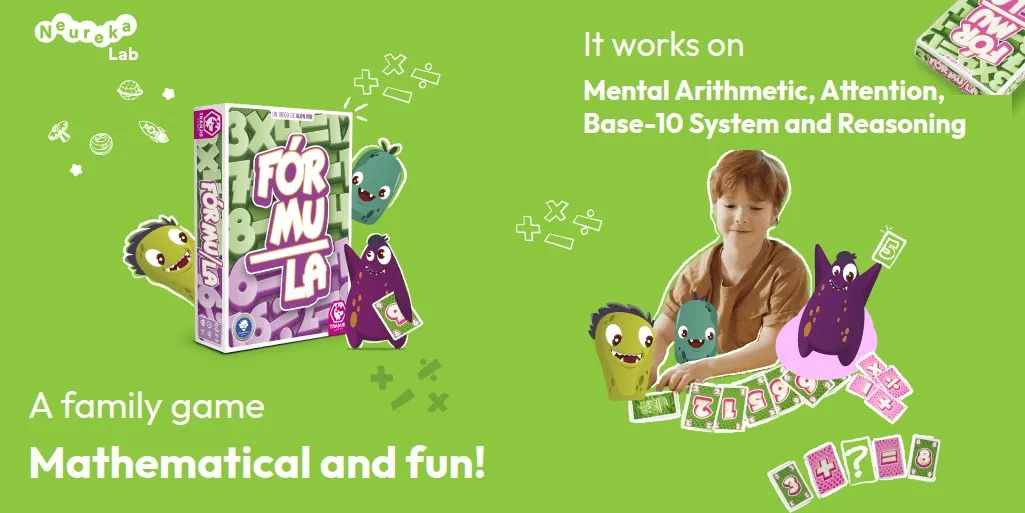
The game Fórmula, from Tranjis Games, is a mathematical adventure in card form, in which children can improve their calculation skills using number cards and cards with operation signs. It is a game that can be played both in the classroom and with the family, where the aim is to be quicker than the others in creating different mathematical equalities by playing with numbers and signs, and to get rid of the cards in your hand before anyone else.
“Fórmula” is an ideal game for children with mathematical difficulties or dyscalculia, since it works on the following capacities:
- Mental arithmetic.
- Attention.
- The base-10 system.
- Reasoning.
Carrera de Letras
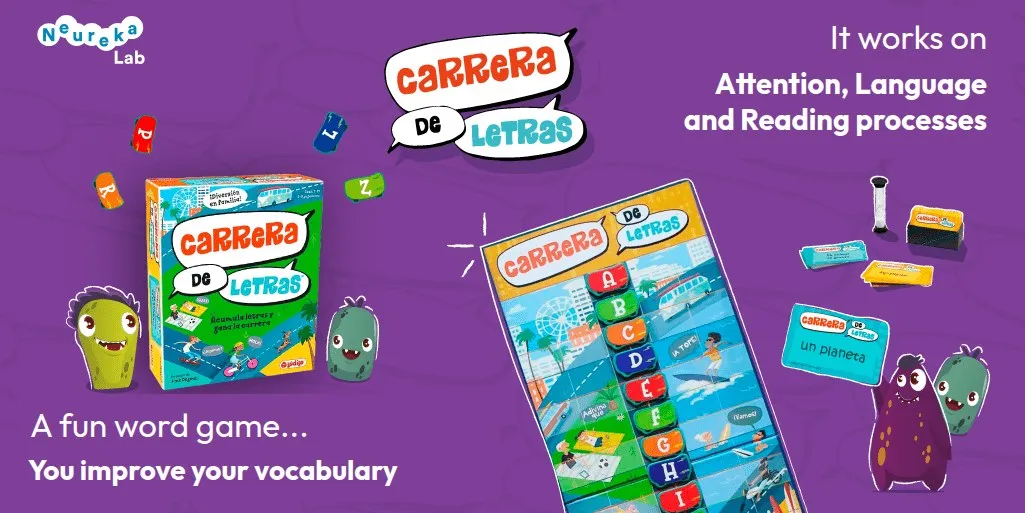
In the game Carrera de Letras, from Lúdilo Juegos, two teams of players compete to win the letters on the board through vocabulary. The letters of the alphabet are laid out in the centre of the board and, on one team’s turn, that team draws a card giving a definition. Within a limited time, the team members must discuss the words they can think of that begin with each letter on the board and match the definition. The more words beginning with each letter they say, the more letters they can pull towards their side of the board. The first team to bring eight letters over to their side of the board wins.
This game is a good alternative for children with language difficulties and for improving their vocabulary, since it works on:
- Attention.
- Language.
- Reading processes.
Fantasma Blitz
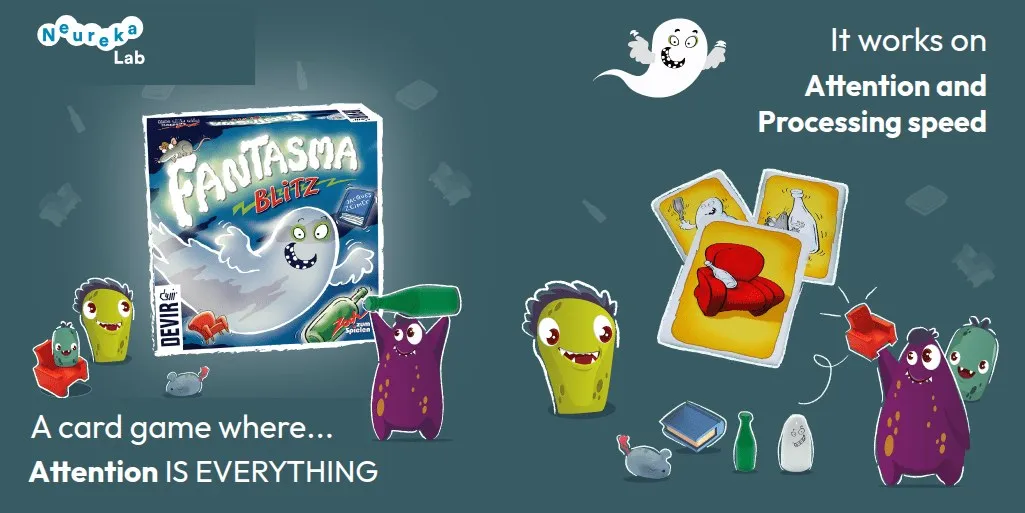
Fantasma Blitz is a game created by Jacques Zeimet and distributed by Devir Iberia, which offers an ideal entertainment option for children with attention difficulties or signs of ADHD. The ghost has taken photographs of his favourite objects all around the castle, but the camera was haunted and the shapes and colours of the objects do not appear in their original form in some of the photographs. Using the original objects laid out in the centre of the table, children must help the ghost find the photographs that show the object’s original shape and colour.
Thanks to the game “Fantasma Blitz”, it is possible to work on:
- Attention.
- Processing speed.
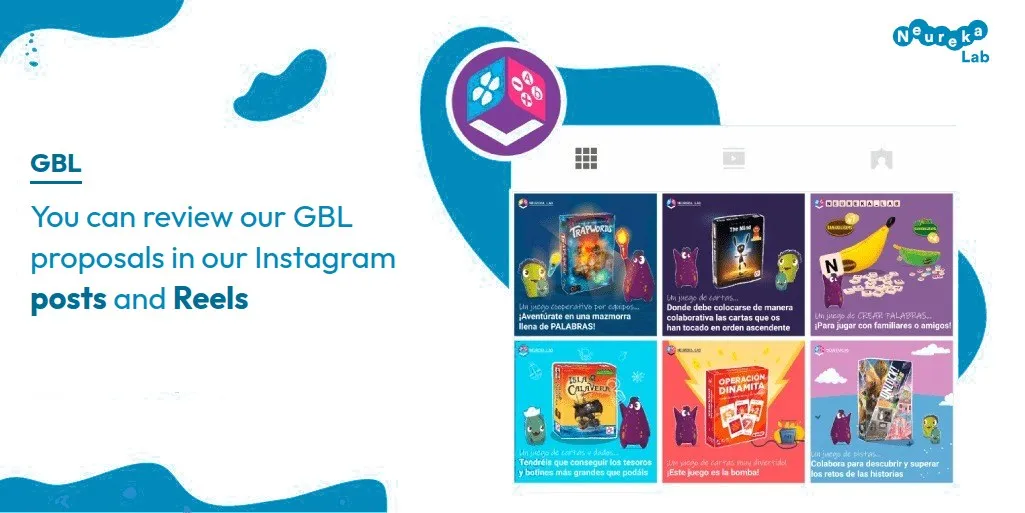
Visit the NeurekaLAB Instagram to discover more recommended games for putting game-based learning and serious games into practice both in the classroom and at home.
Scientific evidence: