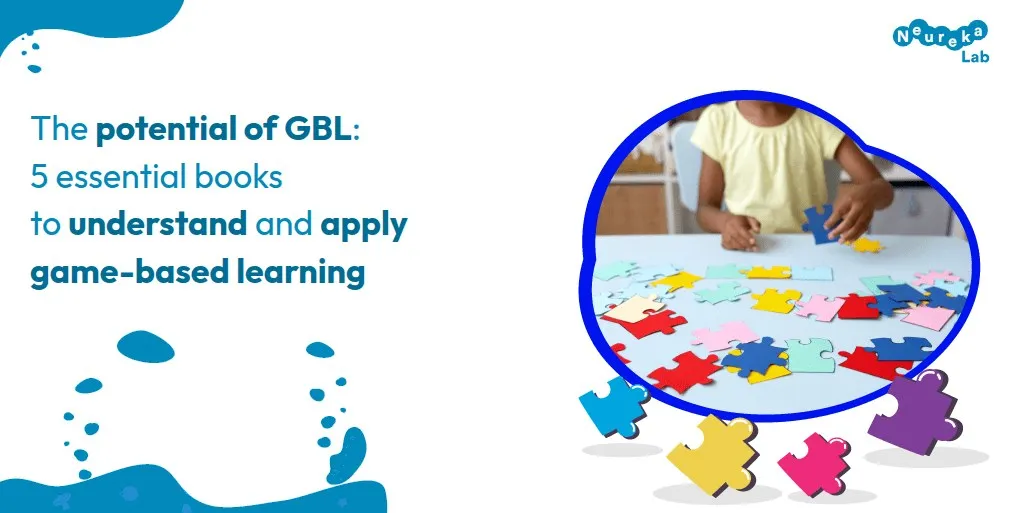
Ongoing teacher training and the active involvement of parents are essential to ensure that education evolves at the same pace as social and technological change. Educators play a fundamental role in preparing students to face the challenges of a world in constant transformation. Incorporating innovative teaching methodologies, such as game-based learning (GBL) and serious games, requires up-to-date training, since this approach fosters not only academic development but also the social and emotional skills essential for modern life.
What is GBL?
Fostering an education based on experience and motivation is essential for students’ success, especially during the early stages of their education. In this context, game-based learning (GBL) and serious games emerge as an effective teaching methodology for engaging students in active learning. Through play, children not only absorb knowledge in an enjoyable way, but also develop social, emotional and cognitive skills in an integrated manner, thereby fostering active and meaningful learning that lasts over time.
This methodology takes on particular importance among students facing learning difficulties, who are often disengaged and lacking motivation during their education, since it provides a dynamic way of teaching, adapted to each student’s profile, and promotes their active participation.
Recommended reading for applying GBL in the classroom and at home
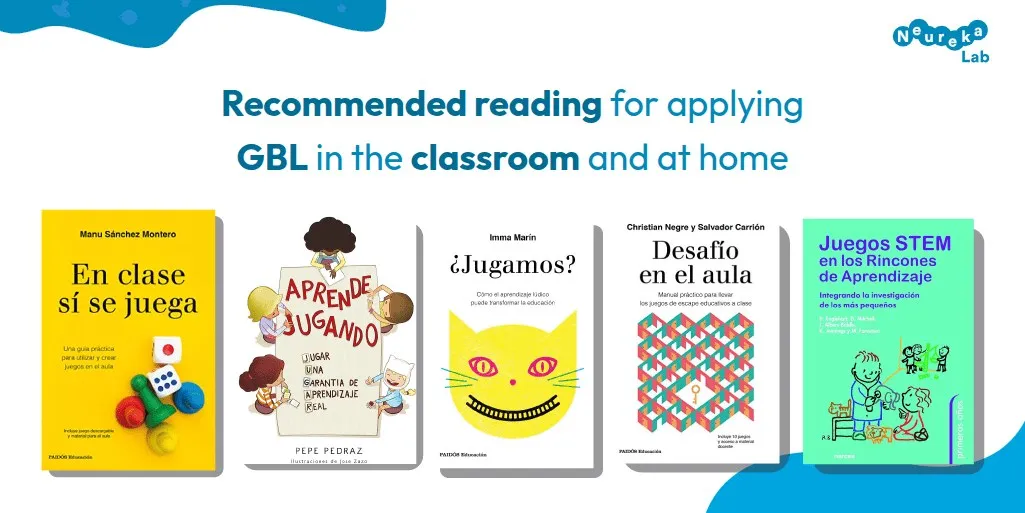
To stay up to date in a changing and dynamic educational landscape, it is worth exploring reading material that provides ideas and practical advice for applying game-based learning both at school and at home. Below are five book recommendations that constitute highly valuable resources for educators and parents, offering an enriching perspective on how to effectively integrate this innovative approach to learning in a variety of contexts.
En clase sí se juega
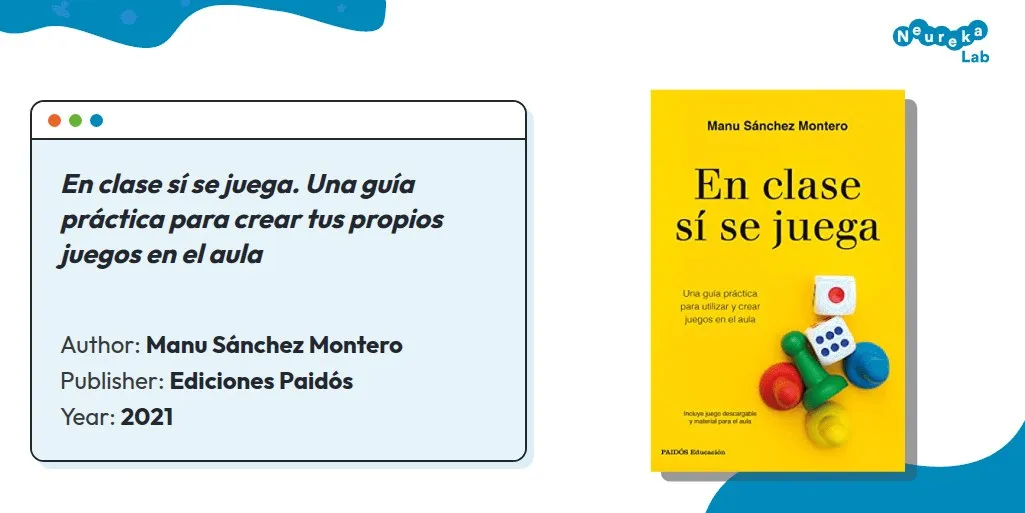
A book that transports readers into the fascinating world of learning through play. The author, drawing on his own experience as a student, puts himself in pupils’ shoes and reflects on the most memorable moments of his school years. From a broad perspective, he argues that play is not only fun, but also a powerful tool for developing a wide range of cognitive, physical, emotional and social skills and abilities.
Sánchez Montero highlights the current trend towards an education that places the pupil at the centre of the learning process and encourages them to be the protagonist of their own education. As an experienced teacher, the author shares how his own teaching practice has been enriched through the integration of play as a pedagogical tool. The book provides methodologies and practical examples that teachers can apply in the classroom and incorporate into their daily practice, thereby creating an experience-based learning environment that makes learning more memorable for pupils.
Aprende jugando
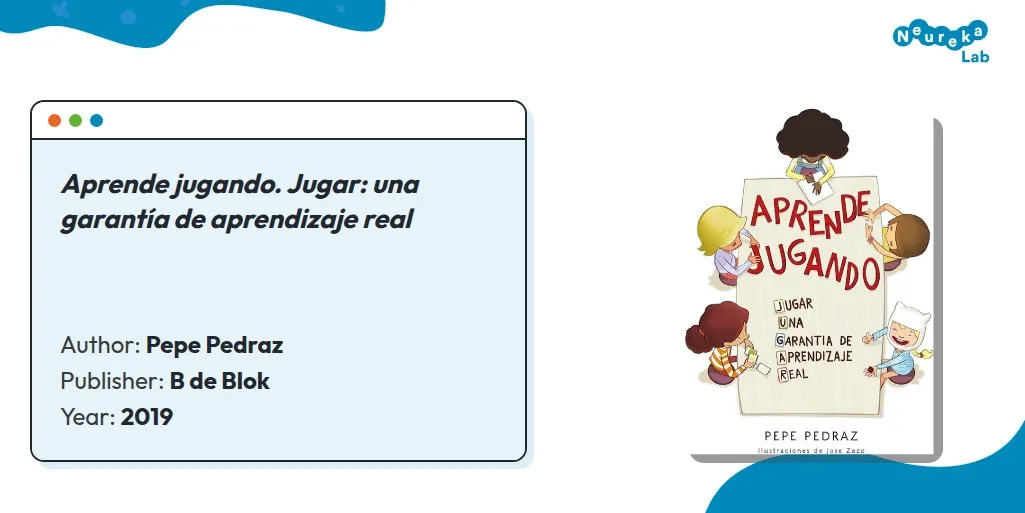
A work that offers an innovative vision of how to foster children’s learning through play. Written by Pepe Pedraz, a designer specialising in the development of narrative games and play-based experiences, the book transports the reader into the exciting world of five girls who discover the charm of learning through play experiences. With a specific focus on the home environment, the book provides parents with a practical guide with concrete examples for working on important values through play.
Pedraz highlights the use of role-playing games as a teaching tool, emphasising their narrative power to involve children in adventures where they make important decisions. Through this approach, children not only learn, but also become the architects of their own stories.
¿Jugamos?
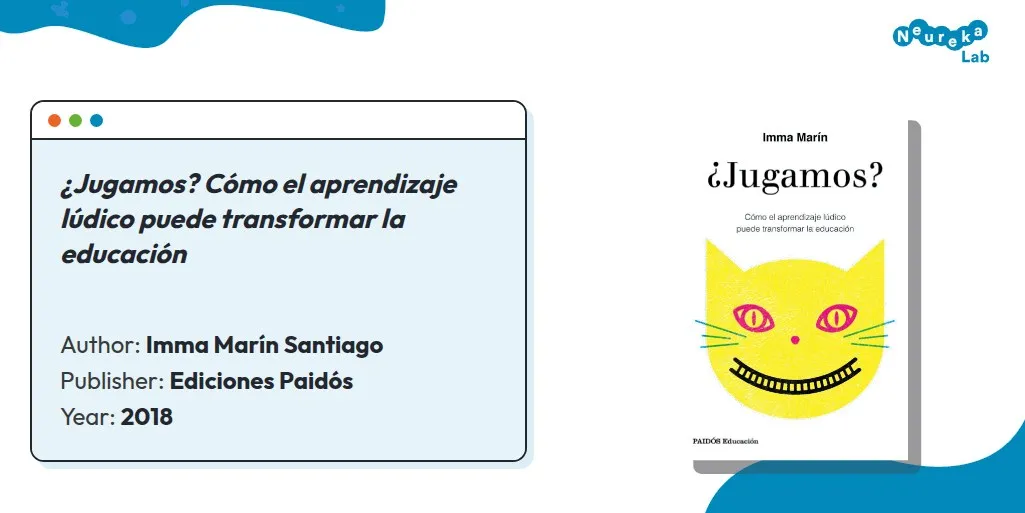
A transformative read that addresses the limitations of the current education system and proposes an innovative alternative: play as a tool for overcoming the barriers that hinder learning. The author, founder of MARINVA, a consultancy specialising in the use of play as a methodology for educational transformation, offers a groundbreaking and motivating perspective on learning.
Drawing on the narrative of Alice in Wonderland, the author invites readers to embark on a gamified adventure, where each chapter is a door to explore, guarded by the characters from the story. As readers progress, they obtain keys and resources to fill their “playful hat”, reinforcing the idea that play is not only a tool for entertainment, but a powerful way to connect with curiosity and a passion for knowledge. Through this work, the author argues that motivating, experiential learning can transform the way children perceive school, and encourages all educators to consider gamification as a tool for transforming the teaching-learning process.
Desafío en el aula
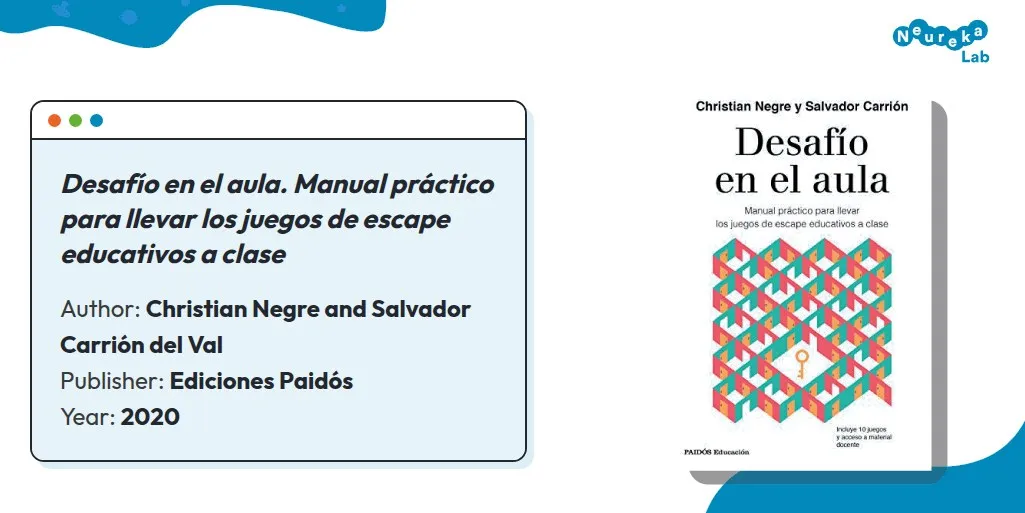
A useful resource for all teachers looking for new ways to approach their educational work. This reference manual clearly and concisely defines classroom escape games and offers practical examples of how to incorporate them into the educational context. Divided into two parts, the first introduces the essential foundations of escape games, focusing on how this innovative methodology can transform classroom dynamics. The second part of the work goes further, providing practical tools and presenting ten escape games specifically designed for the educational environment.
With detailed resources and creative proposals, this book serves not only as a theoretical guide, but also as a practical manual for those who wish to implement this exciting and participatory methodology in the classroom. Through this read, teachers will discover new ways to capture their pupils’ interest and transform their educational experience into a more interactive and enriching one.
Juegos STEM en los rincones de aprendizaje
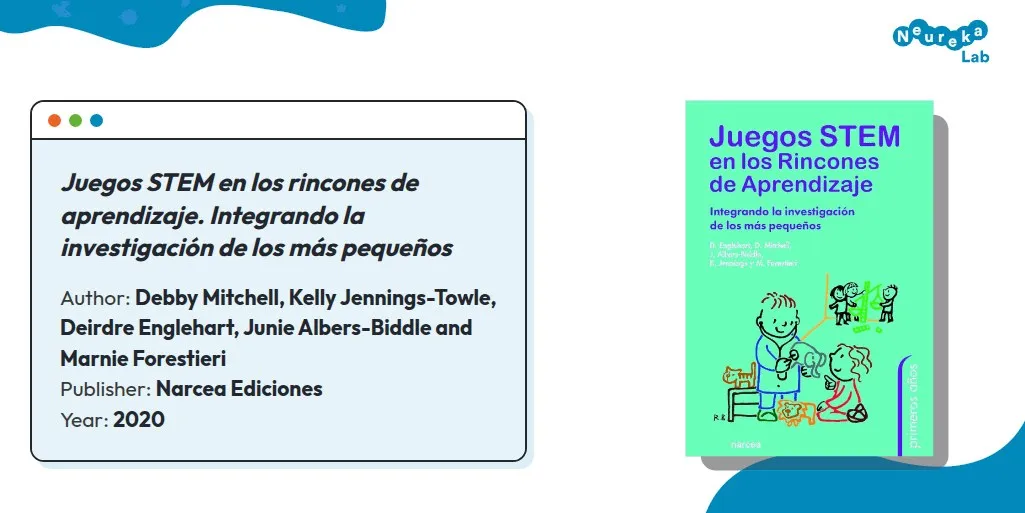
Essential reading for educators seeking to integrate science, technology, engineering and mathematics in a creative and effective way from early childhood education onwards. With more than one hundred STEM games, the book offers a comprehensive overview of how to implement integrated activities in different learning corners, covering areas such as art, literacy, blocks, dramatic play, music, mathematics and science. Through the concept of “corner-based learning”, the authors present a methodology that defines designated spaces in the classroom where children, individually or in small groups, can take part simultaneously in various learning activities.
This book not only provides a wide range of practical activities, but also highlights the importance of active learning for students’ all-round development from early childhood. Through this work, educators will discover a variety of games to foster curiosity, problem-solving and collaboration in a diversified learning environment, contributing to children’s preparation for a future driven by technology and creativity.