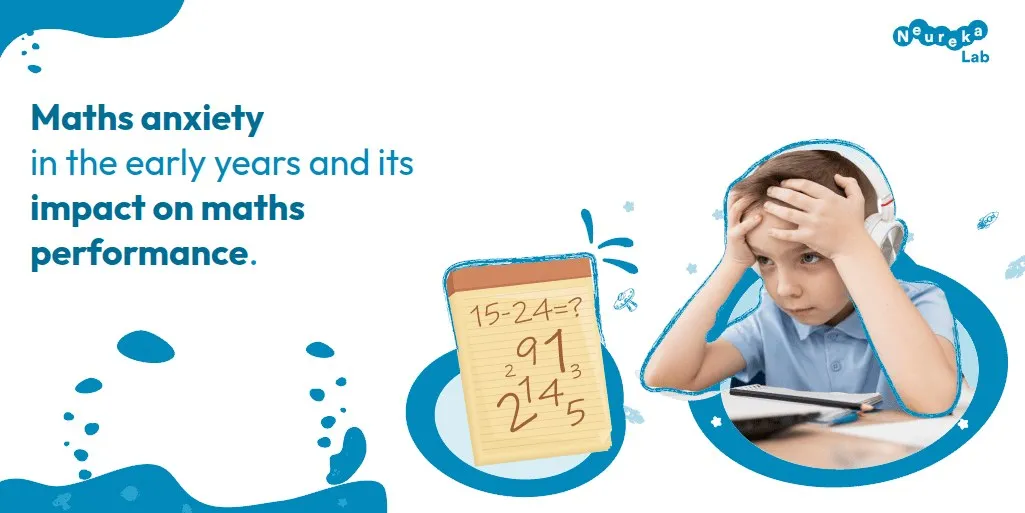
Mathematics is an essential pillar of education and of understanding the world around us. During childhood, it plays a crucial role in cognitive development. In the educational sphere, mathematics forms the basis of many skills. In the personal sphere, we find it in everyday tasks such as doing the shopping, telling the time, calculating measurements, and so on.
Given its importance in both academic and personal life, researchers, educators and professionals in the field of pedagogy have contributed to including in curriculum planning a broad and comprehensive programme that consolidates mathematical knowledge, working on it from the earliest years.
What is maths anxiety?
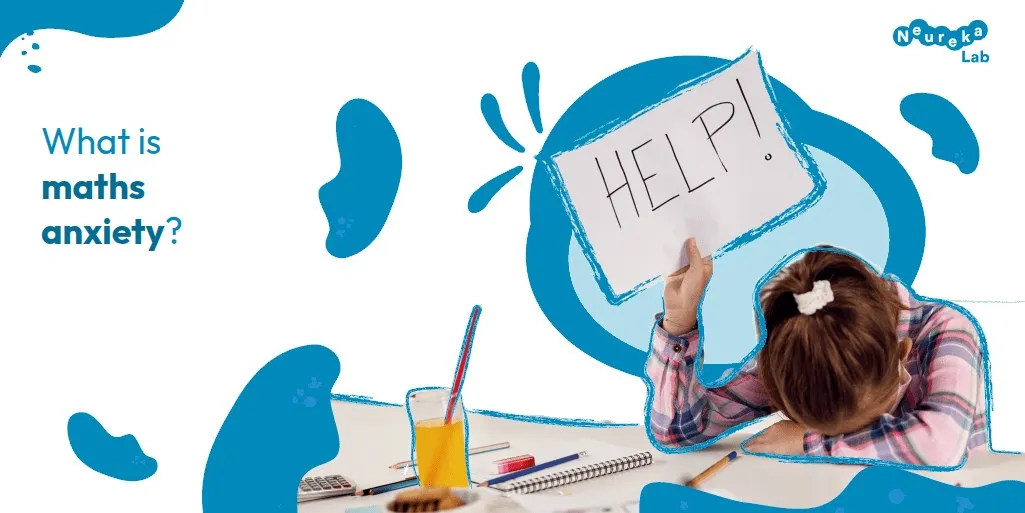
Mathematics - and any subject that involves carrying out mathematical tasks - is known for its complexity, since it usually requires several cognitive skills, such as logical reasoning, problem-solving ability or a deep understanding of abstract concepts. This can intimidate some students when facing mathematical tasks, triggering what is known as maths anxiety.
Maths anxiety is an adverse emotional response, a feeling of worry or panic associated with mathematics. Even when students have the skills needed to complete mathematical tasks, maths anxiety can affect their confidence and their ability to tackle mathematical problems, creating a mental block that can reduce academic performance in this field.
The impact of maths anxiety at school
At school, maths anxiety can be an obstacle to succeeding not only in Mathematics per se, but also in other related higher-level subjects, such as Technology, Physics, Statistics, and so on. In addition, outside the curriculum, any interaction that requires mathematical thinking can also make it harder for students to take part in this kind of activity because of fear of and aversion to mathematics.
In the long run, if this anxiety persists, there is a risk that the student will disengage from this field of knowledge or even that it will harm them emotionally, to the point of losing the motivation to learn and ending in school failure. For this reason, it is important to identify maths anxiety in time in order to apply the appropriate measures to combat it.
The profiles most susceptible to maths anxiety
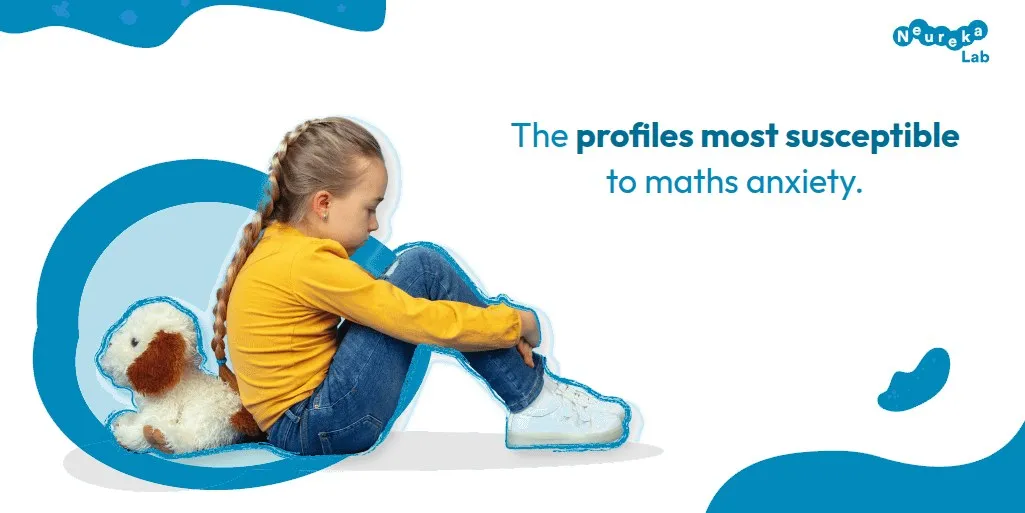
Several scientific studies have focused on analysing maths anxiety and how to alleviate it for better achievement in mathematical tasks. However, many of these studies focus on secondary school students and adults. Today, many experts affirm that maths anxiety can appear from childhood and, for this reason, they consider it important to work on it from an early age to prevent it from persisting over time.
Sometimes, maths anxiety can be the result of multiple factors, including past negative experiences with mathematics, a lack of confidence in one’s own abilities, external pressure to perform well in mathematics, or a teaching methodology that is not compatible with the student’s individual needs. That is why it is considered important to pay special attention to profiles of students with mathematical difficulties or low self-esteem, as well as to children with high intellectual abilities.
How to combat maths anxiety in the early years
From the first years of education, it is essential to establish a positive foundation with mathematics to prevent anxiety from developing. Several studies conclude that by alleviating the adverse emotions and worries of students with maths anxiety, a better performance in mathematical tasks will be achieved.
On this premise, experts recommend:
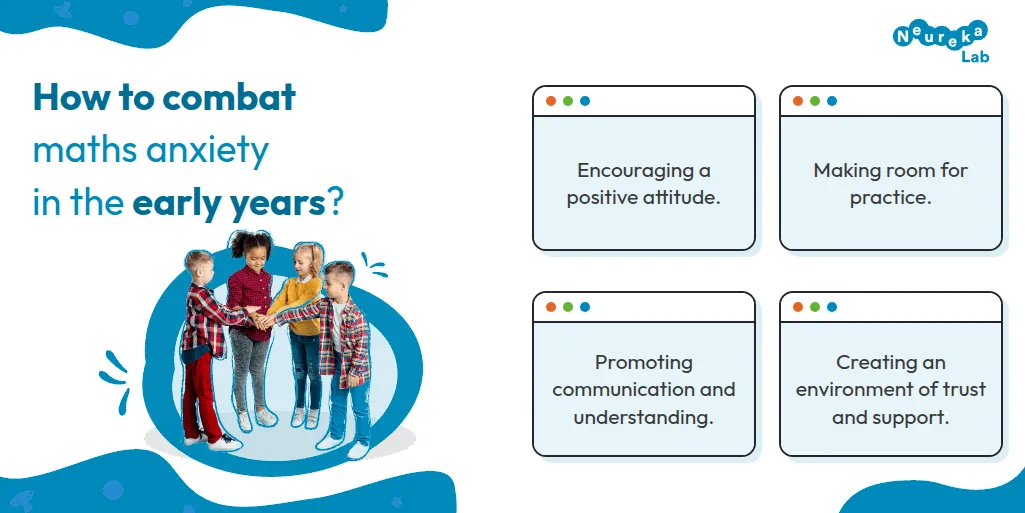
- Encouraging a positive attitude. Both at school and at home, it is vital to give positive reinforcement to the student’s effort in order to motivate them to keep learning.
- Including new ways of learning. To create a more engaging dynamic, many schools opt for gamification as a teaching method that incorporates play. There are various games that can be applied in the educational environment, bringing greater motivation for learning.
- Creating an environment of trust and support. The environment is a relevant factor in the learning process. Pressure, expectations and stereotypes should be avoided so that students do not see learning mathematics as a negative experience.
- Promoting communication and understanding. We need to go beyond memorising formulas and foster an understanding of the “why” behind a concept. At the same time, it is vital to ensure a space for communication so that students can express their doubts, concerns and perspectives.
- Making room for practice. To achieve both knowledge and the habits of continuous learning, it is important to maintain constant activity and practice, for example by playing mathematical video games daily to learn in a playful way.
NLab Family
Where mathematical difficulties or dyscalculia are present, we offer NLab Family, the mobile and tablet application available for Android and iOS, with which children aged 5 to 8 can play while they learn anywhere and at any time. To tackle maths anxiety, the most important thing is to create a motivating and relaxed environment that reduces adverse emotions towards mathematical tasks.
NLab Family follows the NeurekaNUM methodology and is based on scientific evidence to offer children the activities that will be most effective in their learning process. Sessions last a maximum of 15 minutes a day, thereby guaranteeing targeted use with a clear educational objective.

Scientific evidence:
Jameson, Molly. M. (2014). Contextual factors related to math anxiety in second-grade children. The Journal of Experimental Education, 82(4), 518-536. DOI: 10.1080/00220973.2013.813367.
Maloney, Erin. A.; Beilock, Sian. L. (2012). Math anxiety: Who has it, why it develops, and how to guard against it. Trends in cognitive sciences, 16(8), 404-406. DOI: 10.1016/j.tics.2012.06.008.
Vukovic, Rose. K.; Kieffer, Michael. J., Bailey, Sean. P.; Harari, Rachel. R. (2013). Mathematics anxiety in young children: Concurrent and longitudinal associations with mathematical performance. Contemporary educational psychology, 38(1), 1-10. DOI: 10.1016/j.cedpsych.2012.09.001.
Wu, Sarah; Amin, Hitha; Barth, Maria; Malcarne, Vanessa; Menon, Vinod (2012). Math Anxiety in Second and Third Graders and Its Relation to Mathematics Achievement. Frontiers in Psychology, Vol. 3. DOI: 10.3389/fpsyg.2012.00162.