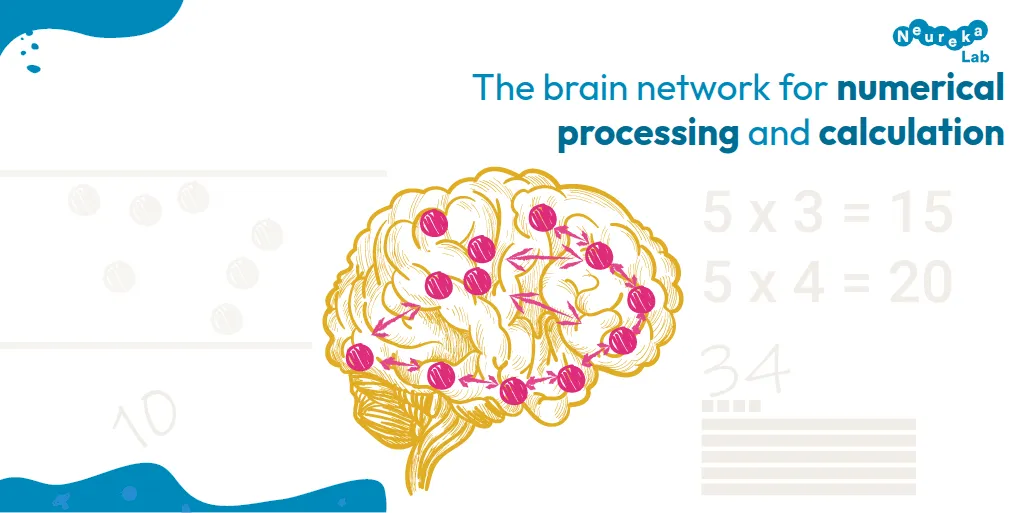
The brain is the most complex organ in the entire body, bringing together a wide variety of regions, connections, nerve structures and stimuli that work towards optimal psychomotor development. Throughout an individual’s life, they experience continuous, dynamic learning as a result of the maturation process of their nervous system.
The brain network
Numerical processing and calculation rely on the functioning of different brain regions that are interconnected, forming a network. An alteration in the functioning of any point in this network lies at the root of dyscalculia and maths difficulties.
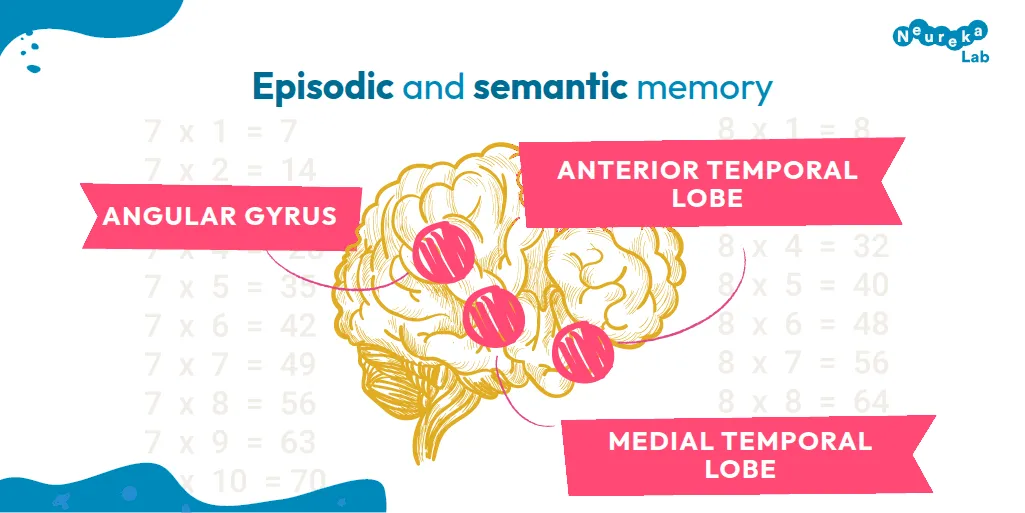
Episodic and semantic memory
Connectivity between these areas facilitates learning and the formation of semantic and episodic memory about numbers, operations and mathematical content. For example, it is key to learning multiplication tables.
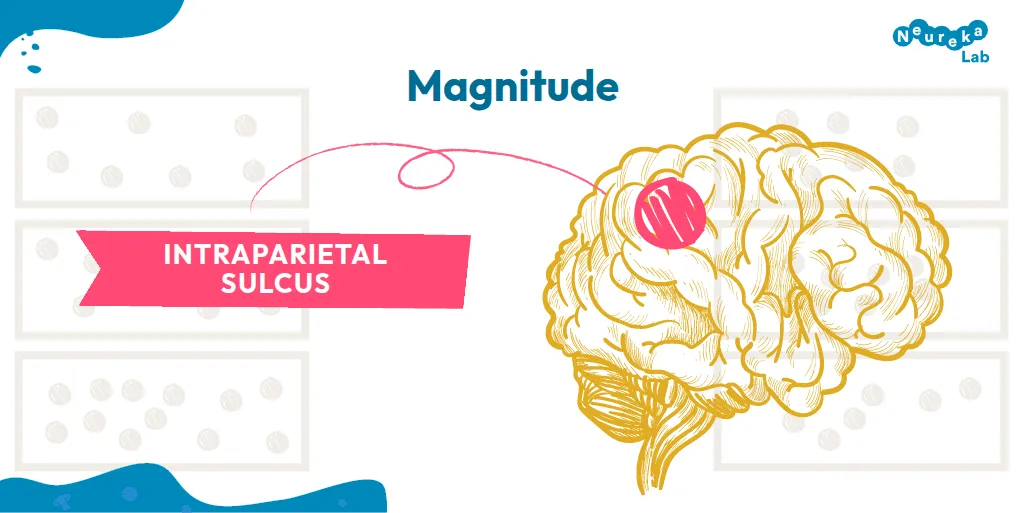
Magnitude
The intraparietal sulcus is the key region for numerical and mathematical learning, working in connection with other brain regions. In babies and in other animal species, it is responsible for enabling comparisons between sets of elements.
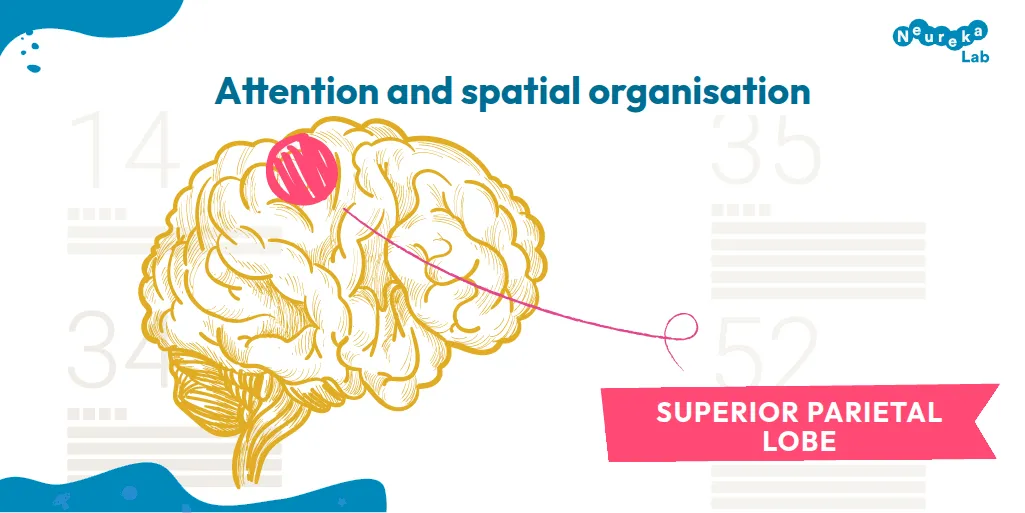
Attention and spatial organisation
The superior parietal lobe is important for carrying out complex tasks, such as calculations involving 2 or more digits.
Better functioning of the brain network
When an anomaly is detected in the functioning of the brain network, cognitive reinforcement — through personalised exercises — will be key to avoid hindering the individual’s learning. For children between 5 and 8 years old, NeurekaLAB makes the NeurekaNUM method available to families, education professionals and schools, providing children with activities to help them improve and speed up their mathematics learning.
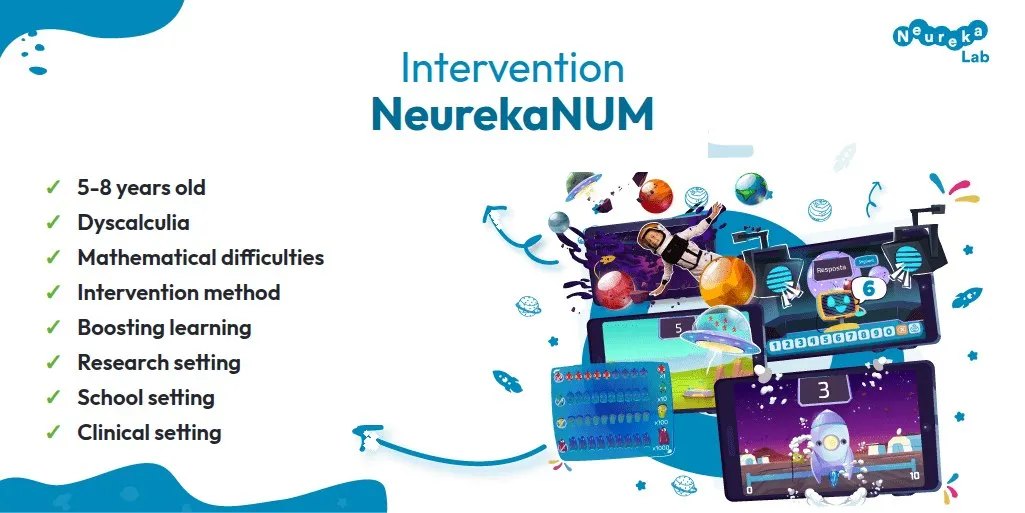
It is a fully automated method that uses artificial intelligence to create a specific profile for each child, adjusting the type of activities to their performance in each aspect.