Memory is a key component of human brain function and has a significant influence on our everyday lives. It is a cognitive process involving the capture, storage and retrieval of information, which allows us to learn, adapt to new environments and situations, remember past experiences and make decisions in our day-to-day lives.
Memory is present in every aspect of life, from the most routine activities to the most complex, and it is especially important during the learning process. In disciplines such as psychology and neuroscience, memory has become a field of interest for research and innovation, with the aim of understanding how it works and improving its efficiency in the field of education.
Working memory and the different types of memory
Over the years, several studies have addressed the concept of memory and its relationship with time, establishing three levels of memory according to how long the captured information is retained.
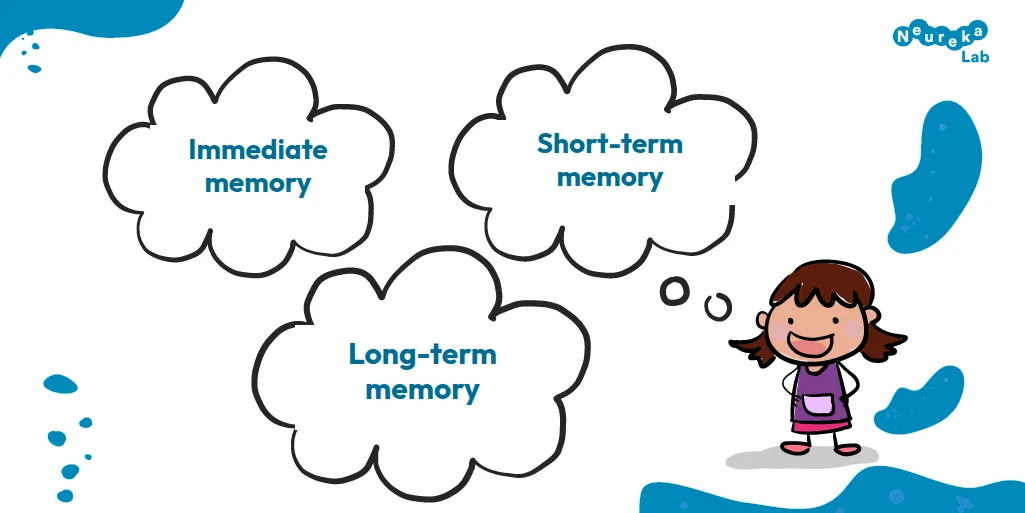
- Immediate memory refers to information captured through the senses, which is retained for a limited period of time and then lost.
- Short-term memory involves capturing information over a brief period, processing it and subsequently losing it. For example, short-term memory is activated when you need to remember a telephone number in order to repeat it or write it down later. If it is not stored, this information is forgotten within a short time.
- Long-term memory allows information to be stored and retrieved later. This form of memory encompasses acquired knowledge, memories of past experiences and everything that has been learnt and consolidated.
In the field of psychology and neuroscience, in the 1960s, the concept of working memory gained prominence. This is a type of memory related to short-term memory, characterised by its cognitive capacity to hold information temporarily while it is mentally manipulated in order to carry out complex tasks. Working memory is a temporary information-processing system that helps us complete cognitive activities such as following instructions, solving problems or understanding texts as we read them.
Unlike short-term memory, working memory retains and manipulates relevant information in order to achieve specific goals. During this process, the dorsolateral prefrontal cortex plays a crucial role, as it allows relevant information to be analysed and synthesised for decision-making while the cognitive task is being performed.
Components of working memory
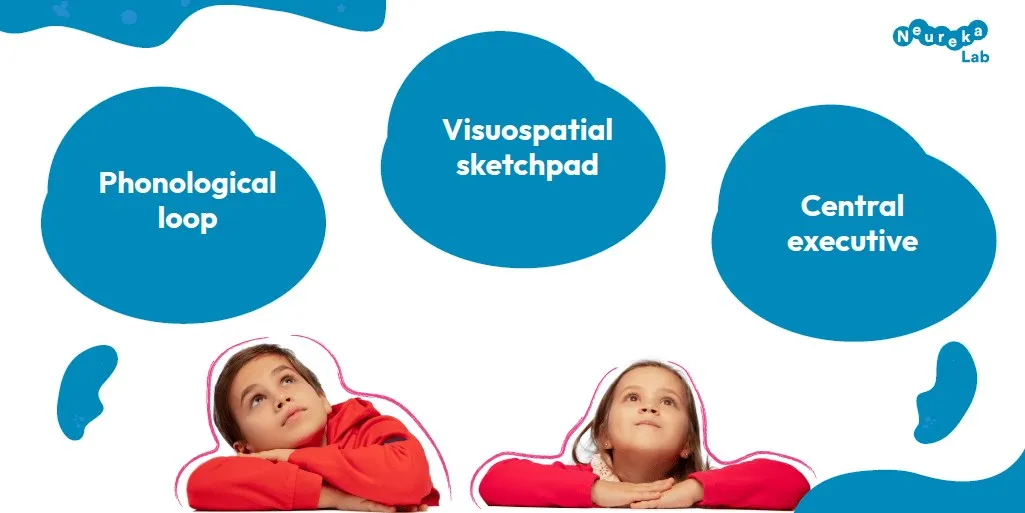
The psychologist Alan Baddeley studied how working memory functions in human cognition and its importance in performing complex tasks. His research focused on how working memory worked and which factors were involved. According to Baddeley, working memory is framed within the three-component model, also known as the Baddeley-Hitch model:
- The phonological loop. Concerning information derived from language, it is responsible for temporarily holding verbal information.
- The visuospatial sketchpad. Responsible for processing visual and spatial information.
- The central executive. The system responsible for supervising and directing attention towards relevant information.
In later studies, Professor Nelson Cowan explained that working memory is not an independent cognitive activity; rather, it requires the activation of long-term memory in order to hold and process the relevant information temporarily captured by working memory. For example, it is easier to remember a telephone number when it is given to us in our native language compared with a foreign language we are less proficient in, since working memory processes the information using data stored in long-term memory - in this case, numbers in a language we are more familiar with.
Following this observation, Baddeley proposed a fourth component of working memory: the episodic buffer. This component is responsible for retaining episodes or multidimensional information, that is, the combination of visual and auditory information, or even smell and taste, activating long-term memory.
Working memory and learning difficulties
Several studies have shown that children with learning difficulties score lower on working memory tests. For this reason, it is considered that learning difficulties can affect a person’s ability to process, store and retrieve information, including working memory.
For example, children with dyslexia may have difficulty holding information in mind while reading, since the phonological loop is impaired, affecting their ability to remember the key words of a text and even to understand what they have read. In the case of children with dyscalculia, there is an impairment in the visuospatial sketchpad and they may have difficulty manipulating numerical information in their minds, as well as remembering the steps of mathematical operations while solving problems. Children with attention deficit hyperactivity disorder (ADHD) may also have working memory difficulties, since, due to an impairment in the central executive, they may struggle to sustain attention on a task long enough for the information to be transferred to memory, which can affect, for example, their ability to follow instructions.
However, with appropriate help, such as specific educational interventions or cognitive therapy, people with learning difficulties can improve their ability to use working memory and other cognitive skills.
Improving working memory in the classroom
Thanks to scientific insight, certain classroom practices have been identified that can improve children’s working memory. These are some of the tasks and actions that can be carried out:
- Present educational content in engaging, multi-channel formats. It has been shown that information is better retained if it is captured through the two main channels: auditory and visual. That is why classroom dynamics are proposed that incorporate resources such as videos, infographics, charts, etc.
- Break tasks down. To devote adequate attention to complex tasks, it is recommended to divide them into smaller parts and monitor them periodically.
- Repeat and practise. Working memory is a cognitive capacity that can be strengthened and improved. When memory difficulties arise, it is recommended to keep repeating concepts and allow room for repeated trial and error.
- Play memory games. Dynamic activities such as classroom games encourage participation and motivation in the educational environment.
- Bring in technological formats. There are various digital tools that can facilitate the learning process, the assessment of working memory and the practice of memory tasks, as well as the organisation of tasks and reminders.
NeurekaTEST
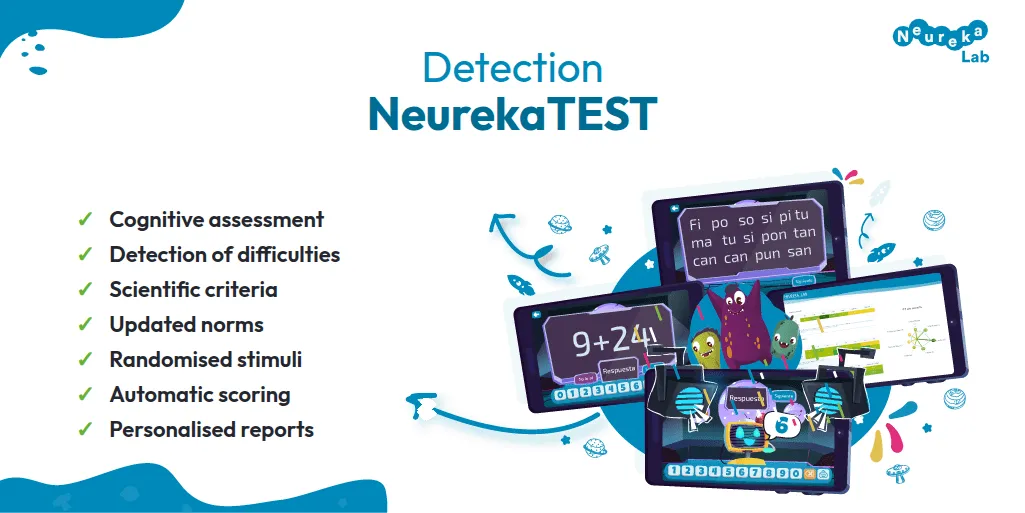
At NeurekaLab we have developed the scientifically validated method NeurekaTEST, aimed at education professionals and designed to assess and detect learning difficulties across different areas of knowledge, through a range of activities focused on understanding the basic learning functions of children aged 5 to 12:
- NeurekaCALC: numerical processing and calculation.
- NeurekaLEC: reading processes.
- NeurekaMEM: working memory.
- NeurekaATT: sustained attention.
- NeurekaTDAH: presence of signs of ADHD.
Among the different basic functions to be analysed, we highlight NeurekaMEM, the activity that assesses children’s working memory, offering gamified dynamics, immediate feedback and results reports.
Scientific evidence:
Baddeley, Alan (2010). Working memory. Current Biology, 20(4). R136-R140. DOI: 10.1016/j.cub.2009.12.014.
Etchepareborda, Maximo Carlos; Abad-Mas, Luis (2005). Memoria de trabajo en los procesos básicos del aprendizaje. Revista de neurología, 40(1), 79-83. DOI: 10.33588/rn.40S01.2005078.
Swanson, H. Lee; Siegel, Linda (2011). Learning disabilities as a working memory deficit. Experimental Psychology, 49(1), 5-28.