
The growing presence of screens and digital media has radically transformed our society, marking the beginning of a new digital era. Screens on devices such as smartphones, tablets and computers have opened up new opportunities for children’s learning and entertainment. In this context, education professionals, parents and the scientific research community alike are asking what impact screens have on children’s learning and cognitive development.
The impact of screen use on children
In this digital landscape, children’s use of screens is increasing significantly, and the concept of “digital natives” has emerged to describe this new generation of children who, from a very young age, not only have access to digital devices but also use them naturally. This situation raises the need to review how screens can be used optimally and, at the same time, to explore the opportunities and challenges they bring.
Screens and cognitive development
Concerns about the impact of screens on children have been the subject of extensive study, especially in relation to their effect on cognitive skills during the early years of development. Among these studies, it is worth highlighting the research carried out by Pujol et al. (2016), which showed that optimal, moderate use of video games on different digital devices, such as computers, tablets or games consoles, was associated with faster and more consistent psychomotor responses to visual stimulation. Although in some cases an improvement in attention and working memory was also observed, these variables still show inconsistent results, making it impossible to establish a solid conclusion as to whether commercial video games provide any benefit to the latter cognitive skills.
According to the study, carried out with children aged 5 to 11, one hour of video games per week is enough to guarantee this positive effect in children. At the same time, it has been observed that spending more time does not increase these benefits; rather, it presents certain drawbacks in terms of the behaviour of those children who are exposed to screens without any form of regulation.
How screens affect behaviour
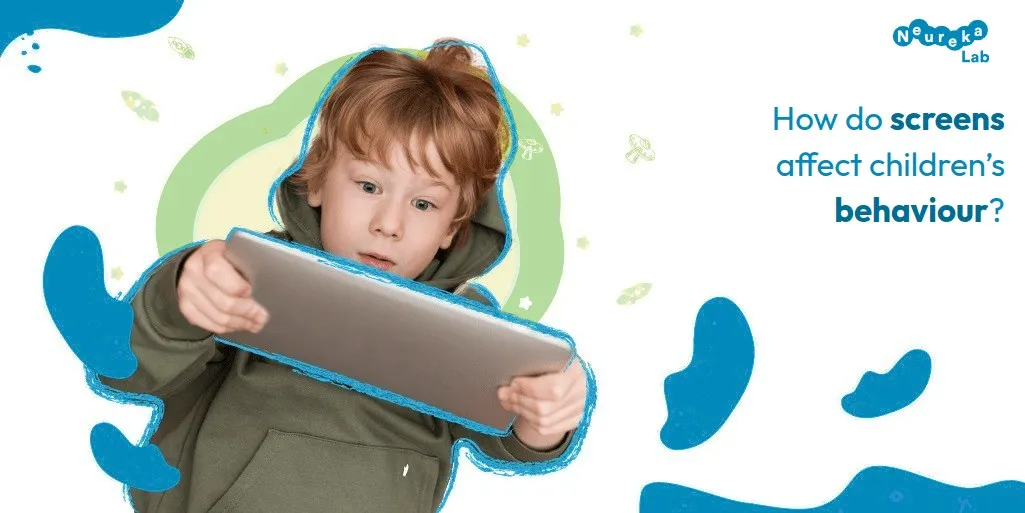
One of the most frequently discussed concerns in research on the impact of screens on children is how they affect the habits and behaviours adopted by children who are overexposed to digital content. It has been shown that, regardless of the content, exposure of more than 9 hours per week in front of screens correlates with behavioural problems and difficulties attending to real-world tasks, negatively affecting academic performance and relationships with others. For this reason, it is important to limit and regulate screen use in order to obtain the benefits that digital content offers and avoid the potential risks of overuse.
Good screen practices
Digital applications and video games offer significant benefits for learning. These resources provide a playful learning experience, which can motivate students with learning difficulties to participate actively and develop their skills more effectively. Through educational games and adaptive platforms, these children can receive personalised, guided support to overcome their specific challenges.

To ensure appropriate use of digital devices, the American Academy of Pediatrics (AAP) evaluated the screen-use practices that lead to the best outcomes for children. Through this evaluation, recommendations were established for responsible screen use, thereby guaranteeing an optimal and enriching experience.
Regulating consumption and content
A study by García and Dias de Carvalho (2022) highlights the worrying trend of many parents providing digital devices to their children from birth, with the intention of offering them entertainment or a reward, but without contributing any significant benefit to their development. The study argues that children under two years of age should have no contact with screens whatsoever, since this practice adds no value and can affect the development of their cognitive, language, motor and socio-emotional skills. They add that at this age it is crucial to encourage exploration and interaction with the real world through the hands, movement and language.
The analysis suggests that the real benefits of video games and digital content emerge from the age of five onwards, provided that this content is specifically designed to support learning. For better results, it is recommended to use content assessed and validated by education professionals, thereby ensuring that children’s digital experience is enriching and has a positive impact on their development.
Encouraging interaction
In recent years, touchscreen devices have become popular and have opened up new opportunities in teaching. This technology provides an interactive and engaging experience for children, allowing them to explore and learn actively. Touchscreens offer educational resources and interactive games that can enrich learning and boost students’ motivation.
It is essential to bear in mind that, despite the advantages touchscreens offer, we must not neglect the importance of encouraging interaction with the real world. Contact with reality is fundamental to enabling children’s holistic development and allowing them to adapt to their context, meet academic demands and interact socially with success. Finding the right balance between touchscreen use and real-world experiences is key to ensuring healthy growth and well-rounded learning.
Providing accompaniment
The active accompaniment of parents and teachers is essential when children consume digital content or come into contact with screens. This support provides appropriate guidance and supervision to ensure safe and beneficial use of technology. Through this accompaniment, children can be helped to select content appropriate to their age and development, to establish clear boundaries on usage time, and to foster a healthy balance between screen use and other activities.
Furthermore, accompaniment can be an opportunity for dialogue and shared learning, where experiences can be shared and the content consumed can be reflected upon, thereby fostering critical and conscious media literacy. With the active support of adults, children can make the most of the benefits of screens and technology, while their emotional wellbeing is protected and a responsible, educational use of digital devices is encouraged.
Digital applications in education
With the growing use of digital devices, many education professionals are committed to incorporating new technologies into teaching. For a more engaging and motivating experience, much of this content is designed following the game-based learning method and serious games.
Digital applications designed for education not only provide learning resources in a playful and interactive way, but also allow detailed progress tracking, enabling teachers and parents to assess the child’s development and adapt specific teaching strategies. In the case of learning difficulties, applications are a powerful tool for fostering inclusive learning and helping students with difficulties reach their educational potential.
NLab Family
In the face of mathematical difficulties or dyscalculia, we offer NLab Family, the mobile and tablet application available for Android and iOS, with which children aged 5 to 8 can play while learning anywhere, at any time.
NLab Family follows the NeurekaNUM methodology and is based on scientific evidence to offer children the activities that will be most effective in their learning process. Sessions last a maximum of 15 minutes a day, thereby honouring the scientific evidence explained above: making occasional use of screens with a clear educational purpose.

Scientific evidence:
Boot, W. R.; Kramer, A. F.; Simons, D. J.; Fabiani, M.; Gratton, G. (2008). The effects of video game playing on attention, memory, and executive control. Acta Psychologica, 129(3), 387-398. DOI: 10.1016/j.actpsy.2008.09.005.
García-Redondo, P.; García, T.; Areces, D.; Núñez, J. C.; Rodríguez, C. Serious Games and Their Effect Improving Attention in Students with Learning Disabilities. Int J Environ Res Public Health. 2019 Jul 11;16(14):2480. DOI: 10.3390/ijerph16142480. PMID: 31336804; PMCID: PMC6679141.
García S. V.; Dias de Carvalho T. El uso de pantallas electrónicas en niños pequeños y de edad preescolar. Arch Argent Pediatr 2022;120(5):340-345. DOI: 10.5546/aap.2022.340.
Kostyrka-Allchorne, K.; Cooper, N.R.; Simpson, A. (2017), Touchscreen generation: children’s current media use, parental supervision methods and attitudes towards contemporary media. Acta Paediatr, 106: 654-662. DOI: 10.1111/apa.13707.
Pujol, J.; Fenoll, R.; Forns, J.; Harrison, B.J.; Martínez-Vilavella, G.; Macià, D.; Alvarez-Pedrerol, M.; Blanco-Hinojo, L.; González-Ortiz, S.; Deus, J.; Sunyer, J. (2016), Video gaming in school children: How much is enough?. Ann Neurol., 80: 424-433. DOI: 10.1002/ana.24745.