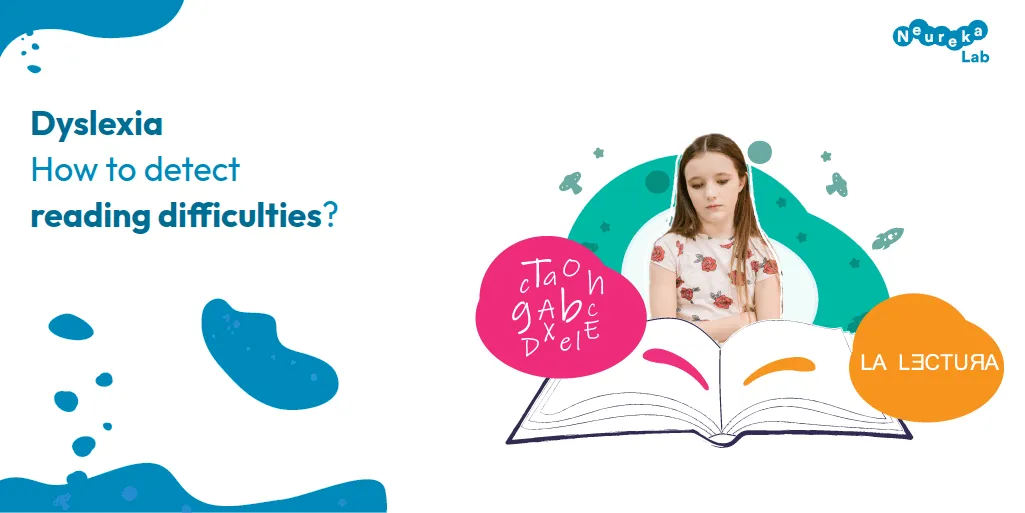
The ability to read is the foundation of learning. The world is surrounded by texts and written narrative that allow us to communicate and understand our environment. In the educational sphere, reading is essential for keeping up with the academic pace, given that educational information is generally presented in writing.
However, it is important to consider that part of the population may experience difficulties when reading, with negative consequences for both their academic and social development. It is therefore crucial to understand the limitations that can arise when facing these reading difficulties, in order to help those who experience them adapt to a more comprehensible and intelligible world.
What is dyslexia?
The specific difficulty in learning to read is known as dyslexia, a disorder with a neurobiological basis that affects not only the reading process but also the oral and written comprehension of language. It is the most widely recognised disorder among the population and the most scientifically studied, in an effort to curb the negative impact this difficulty can have throughout an individual’s educational journey.
A person is considered to have dyslexia when they have limitations in achieving the different phases of reading development. Early detection can help facilitate the learning of reading at each of the stages organically present in the development of reading ability.
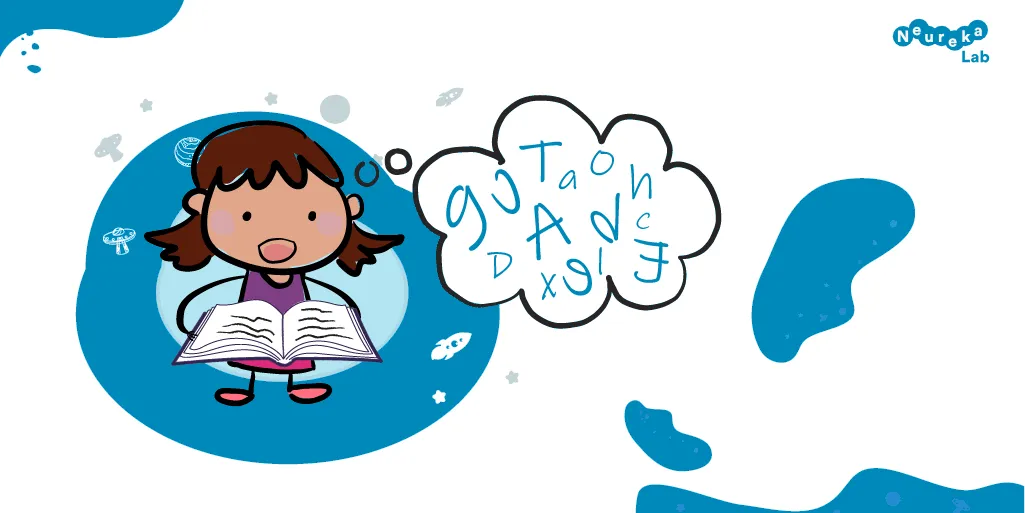
Stages of learning to read
The study of reading ability over the years has made it possible to identify the different stages in which an individual acquires reading capacity. One of the models defining the different stages of learning to read is the model of the phases of literacy development, proposed by Dr Linnea Ehri, an expert in reading development.
Pre-alphabetic phase
The pre-alphabetic phase occurs before alphabetic knowledge. The child identifies the word by using context rather than the alphabet. It consists of identifying some words - and their relationship with their meaning - from letters that stand out, for example identifying a brand’s word by its logo and not by its alphabetic reading. Their identification is therefore based on a strong pictorial component, in which the shape, colours and various aesthetic features of the word capture the child’s attention so that they can recognise it.
Partial alphabetic phase
This phase is based on reading some of the letters of a word and using them for its pronunciation, while the remaining letters can be deduced. The first and last letters are usually the most important at this stage. In the partial alphabetic phase there is an initial phonetic involvement, in which the child tries to pronounce words from their phonological knowledge, that is, the sounds of each letter or syllable. For this reason, at this stage, the child reads slowly and often lengthens the sound of letters or syllables, because they have to make an effort to decode the graphemes and their phonetic relationship.
Full alphabetic phase
Becoming accustomed to certain words means that the child no longer only reads them phonetically, but through their identification. This allows faster reading, because words can be identified without having to decode them phonetically, letter by letter. This phase matures from the age of 8, and it is at this point that working on reading comprehension is key.
Consolidated alphabetic phase
With continued reading practice, drawing on letter patterns becomes consolidated and automatic. In this phase, it is now possible to skim-read and achieve greater reading comprehension.
How to recognise dyslexia in time
Reading is worked on from early childhood, first by understanding the sounds of the letters and then by relating writing to sounds. Depending on the learning stage, there are some specific indicators for identifying dyslexia. The earlier it is identified, the smaller the impact on the remaining stages of learning to read.
The most notable indicators of possible dyslexia at an early age are:
- Delayed oral development.
- Slow vocabulary development.
- Difficulties in pronouncing words.
The most notable indicators of possible dyslexia in childhood are:
- Problems in learning letters and syllables.
- Confusion of words with a similar pronunciation.
- Difficulties in memorising the alphabet.
When reading becomes the main factor in their learning, other more evident indicators of possible dyslexia may appear:
- Difficulty understanding written instructions.
- Difficulty understanding and retaining texts.
- Problems with spelling.
- Slow, non-automated reading.
For this reason, it is important to detect dyslexia in time, to help create a more adapted environment that mitigates the impact of reading difficulties. If these difficulties persist over time, other indirectly related problems may appear, such as difficulties with mathematics, a poor sense of time, difficulties in social relationships, low self-esteem, and so on.
NeurekaTEST
Based on scientific evidence, the NeurekaTEST tool detects the presence of the first signs of learning difficulties, assessing the different basic functions in the school learning of children aged 5 to 12. This tool is aimed at education professionals and schools, so that they can put into practice the proposed activities to detect different types of learning difficulties in children and consider whether a professional diagnostic assessment is advisable.
- NeurekaCALC: numerical processing and calculation.
- NeurekaLEC: reading processes.
- NeurekaMEM: working memory.
- NeurekaATT: sustained attention.
- NeurekaTDAH: presence of signs of ADHD.
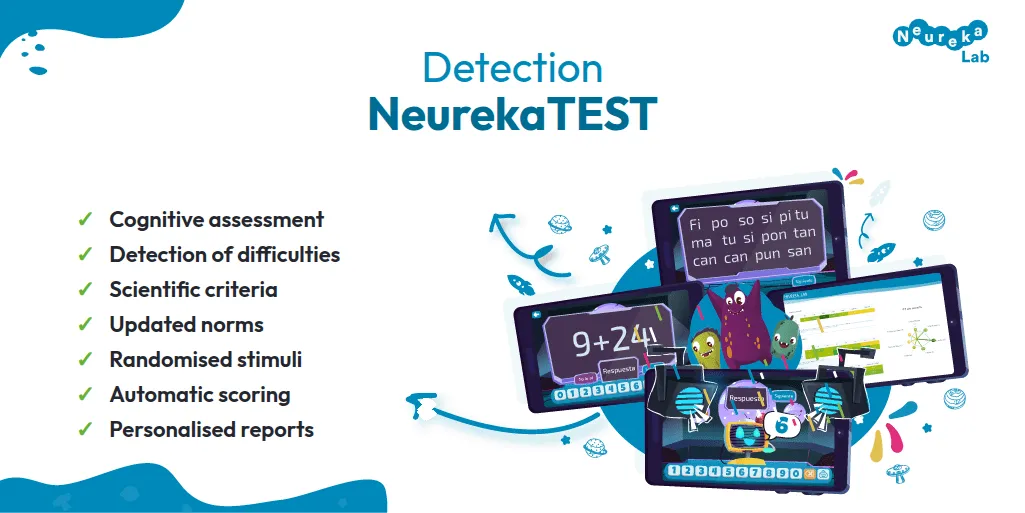
When signs of dyslexia are suspected, professionals and schools can pay special attention to assessment through NeurekaLEC, which makes it possible to understand how easily the child reads and their reading comprehension. The tool gathers the cognitive information assessed for each child, establishing a personalised profile adapted to their individual needs.
Scientific evidence: